The Best Paper for Calligraphy Practice (And What to Avoid as a Beginner)
Choosing the right paper for calligraphy can completely change your results. The surface you write on affects how your ink flows, how your nib responds, and ultimately how confident you feel while practicing.
Whether you're learning for fun, preparing for a workshop or live event, choosing the right paper will make the process smoother and far more enjoyable.
You know how you have a favorite pen because it somehow makes your handwriting look better? Whether it’s a ballpoint, a gel pen, or even one of those cute pens from the dollar store — there’s always one that just works. Calligraphy is the same way. We often talk about our favorite nibs (hello, Hunt 101 for light-handed writers), but we don’t talk about paper nearly enough.
Paper makes a bigger difference than most beginners realize.
Some papers are textured, some are ultra-smooth, and some react very differently with ink and nibs. When you’re more advanced, you learn how to navigate different surfaces — but in the beginning, the wrong paper can be incredibly frustrating.
When I first started experimenting with different surfaces, I quickly realized how much paper affects the outcome. That’s when I realized how differently ink behaves depending on the surface. Nibs can already be temperamental — paper can either make your practice smoother or make it feel impossible.
Whether you’re learning for fun, preparing for a special event, or attending one of my in-person workshops, choosing the right paper will make the process far more enjoyable.
Here are five excellent paper options for practicing calligraphy — and one type I recommend avoiding as a beginner.
Rhodia Paper Pads
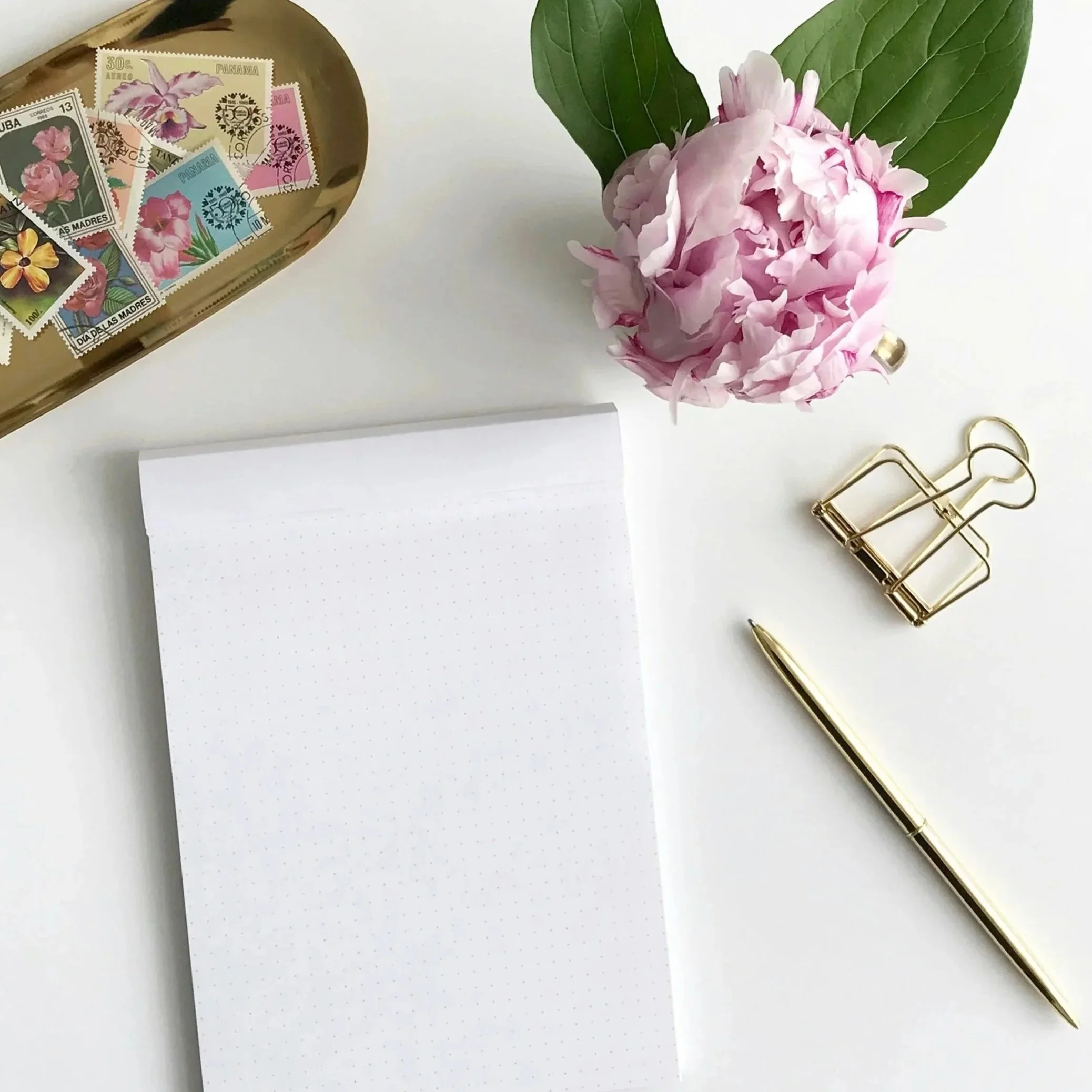
This was the talk of the town when I first started. Every calligrapher I followed seemed to use Rhodia. You can buy blank, dotted (my personal favorite), lined, or graphed versions.
It’s wonderful for keeping all your practice in one place so you can revisit your progress later.
Downside: it’s not the cheapest option, and the paper is fairly thin, so ink may show through to the back side.
Get Rhodia paper here.
Bristol Paper
I had no idea what Bristol paper was until I started experimenting, but it quickly became a favorite. It’s smooth and thicker than regular printer paper without turning into heavy cardstock.
It’s excellent for dip pen practice and especially great for brush lettering (not watercolor).
Get Bristol paper here.
Laser Printer Paper
This is the most affordable option. You can buy a large pack online or at stores like Staples. It’s smooth, holds ink well, and allows you to print guidelines at home.
If you’re just starting out, this is a convenient and inexpensive choice.
The only downside is organization — loose sheets can pile up quickly. I recommend stapling them together or storing them in a folder.
Get laser printer paper here.
Marker Paper
Marker paper works beautifully for alcohol- or oil-based ink and is safe for dip pen calligraphy as well. It’s slightly thicker than regular printer paper but thinner than watercolor paper.
Look for one labeled “bleed-proof” so the ink stays on one side.
Get marker paper here.
Vellum Paper
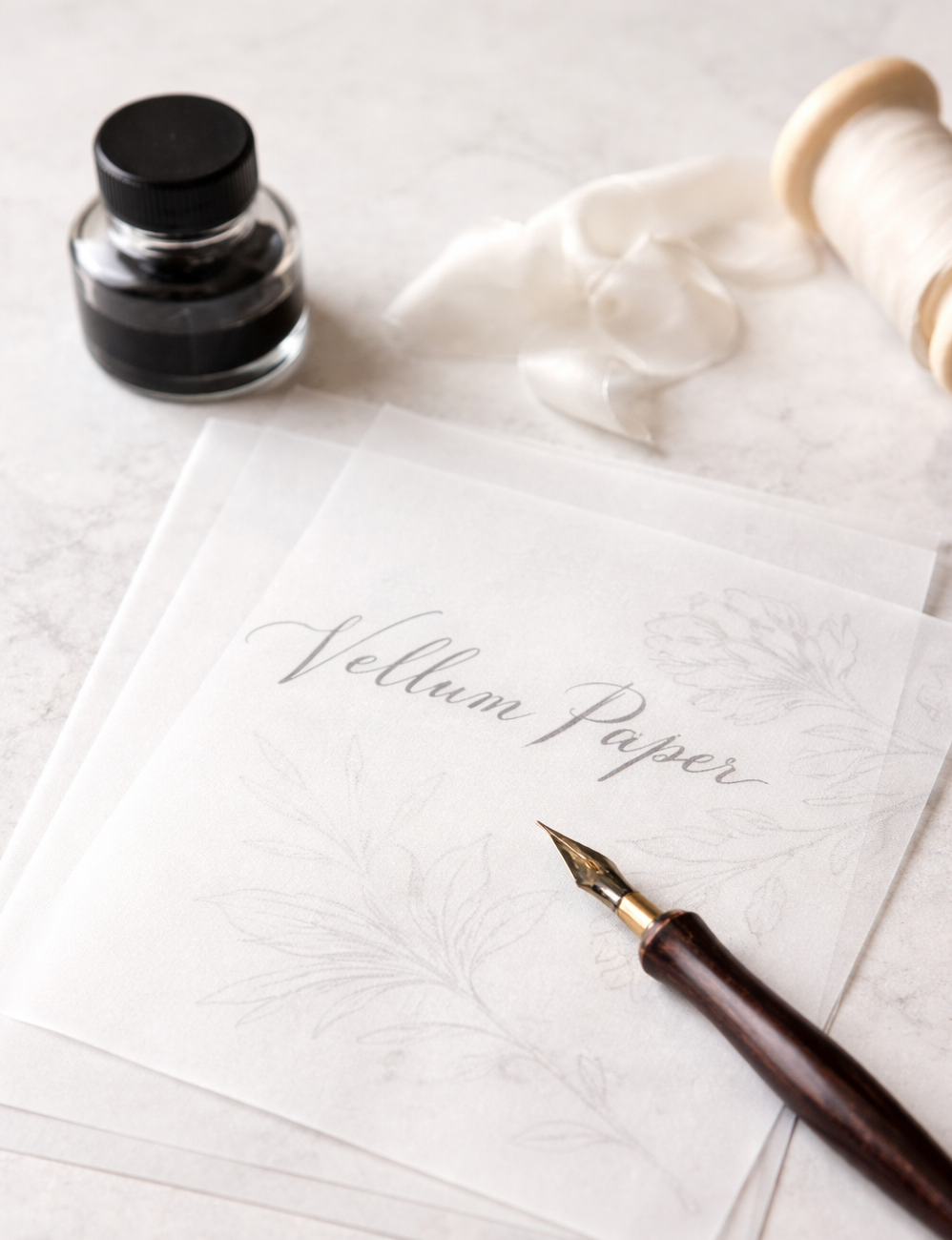
Many of my students are introduced to tracing paper in my classes. Tracing isn’t “cheating” — it’s actually a fantastic way to build muscle memory when you’re new.
Vellum is similar to tracing paper but a little sturdier and easier to work with. You can even print on it if needed.
Downside: it’s more expensive than standard tracing paper.
Get vellum paper here.
Paper I Would Not Recommend for Beginners
Coated or Glossy Paper
You know that glossy greeting card that feels smooth and slightly spongy with a ballpoint pen? It can feel almost embossed when you write on it.
Unfortunately, dip pen ink often won’t stick properly to coated surfaces. The ink may bead up or slide, making it frustrating for beginners.
Handmade Paper
Handmade paper with deckled edges has become incredibly popular for weddings and luxury stationery. It’s beautiful, soft, and romantic.
However, it can be extremely temperamental for calligraphy practice.
The surface is soft and fibrous, which means fibers can catch on your nib, drag ink, and ruin your strokes. For beginners, this can feel discouraging.
What If You Have to Use Handmade Paper?
Let’s say a friend or family member asks you to letter something special — perhaps wedding place cards or escort cards.
First, accept the challenge. It’s an opportunity to grow your skills and showcase your work.
Second, keep the project manageable. Avoid full invitation suites at first. Stick to smaller projects like place cards or labels.
Most importantly: prepare the paper.
Before writing, lightly spray the handmade paper with hairspray. Yes — hairspray. This helps set the fibers and creates a subtle barrier that makes writing smoother. Allow it to dry completely before starting.
You’ll still have texture, but it will be far easier to control your ink.
Choosing the right paper may seem like a small detail, but it can dramatically improve your calligraphy experience.
If you’re interested in building your skills in a hands-on setting, you can explore upcoming workshops here.
And if you’re curious how calligraphy can be used for live personalization at events, you can view my services here.
Practice becomes much more enjoyable when your materials are working with you instead of against you.
